Inhabiting the Interval: Space, Silence, and the Japanese Room
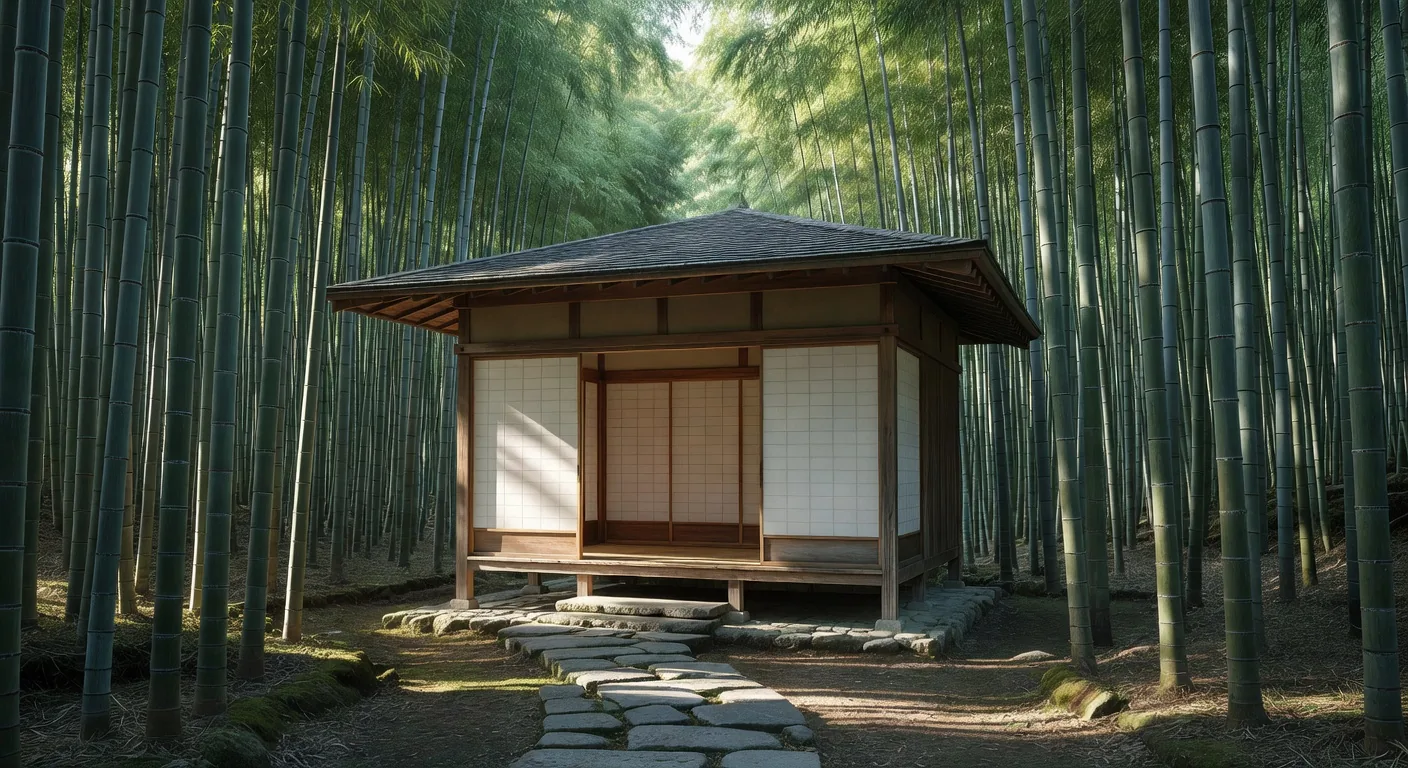
The traditional Japanese interior is perhaps the most sophisticated expression of spatial philosophy ever achieved in domestic architecture. Where Western rooms are defined by their contents — furniture, decoration, purpose — the Japanese room is defined by its emptiness, its boundaries, and the quality of light that filters through paper screens.
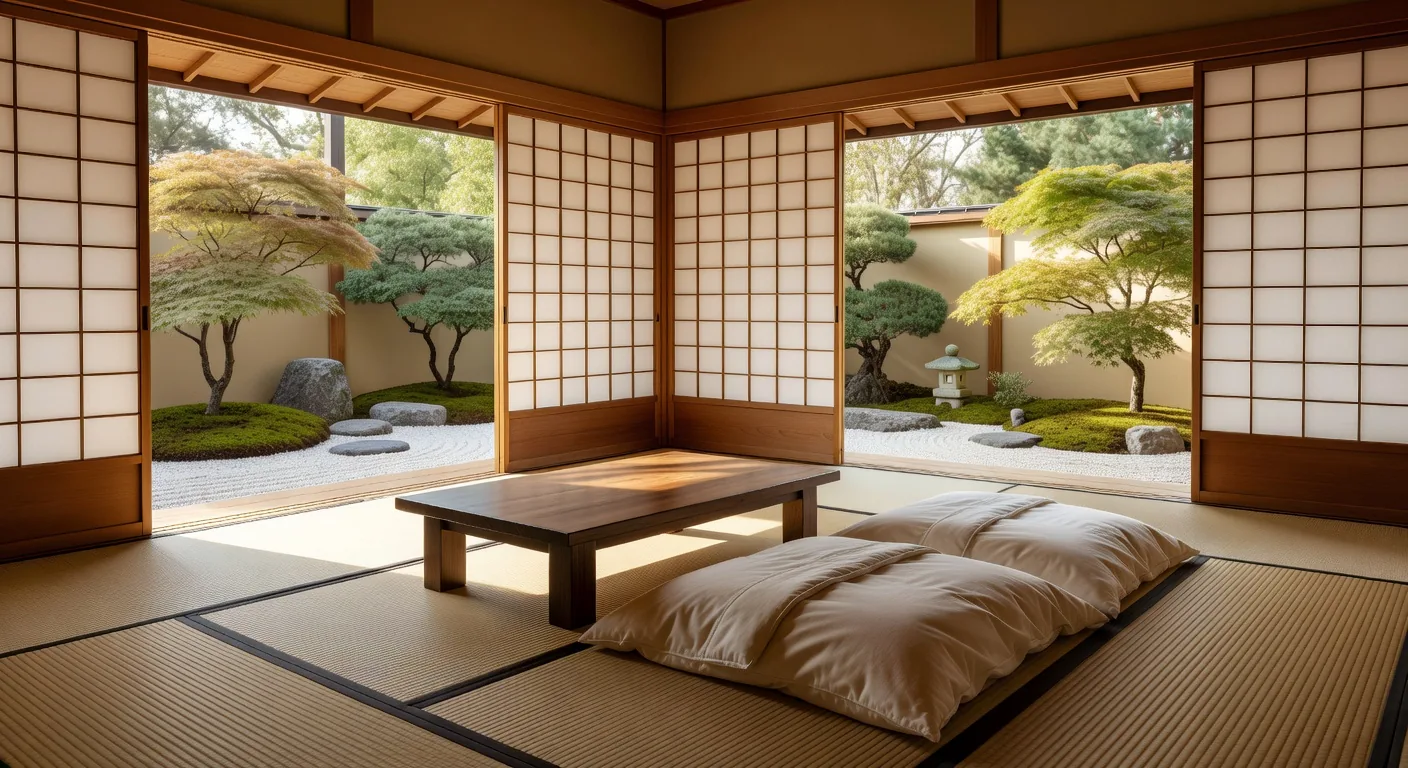
The washitsu, or Japanese-style room, begins with the tatami mat — a standardised unit of woven rush approximately 90 by 180 centimetres — that determines the room's proportions and establishes a tactile, scented relationship between inhabitant and floor. Rooms are named by their tatami count: a four-and-a-half mat room (yojo-han) is the canonical space for the tea ceremony, its dimensions encoding centuries of choreographic intention.
The shoji screen — a lattice of thin cedar strips covered with translucent washi paper — creates boundaries that are not walls but membranes. Light passes through, diffused and equalised, filling the room with what the novelist Jun'ichiro Tanizaki called "a quality of shadow" — a soft, undifferentiated luminosity that makes surfaces appear to float. The shoji can be slid aside entirely, dissolving the boundary between interior and garden.
The tokonoma alcove — a recessed space containing a hanging scroll and a single seasonal flower arrangement — is the room's spiritual centre, its only decoration. By concentrating aesthetic attention in one controlled space, it makes the surrounding emptiness feel intentional rather than absent. The ryokan inn refines all these elements into a complete philosophy of hospitality: the space adapts to the guest, transforming from reception room to dining space to bedroom as futon are laid upon the tatami at nightfall.