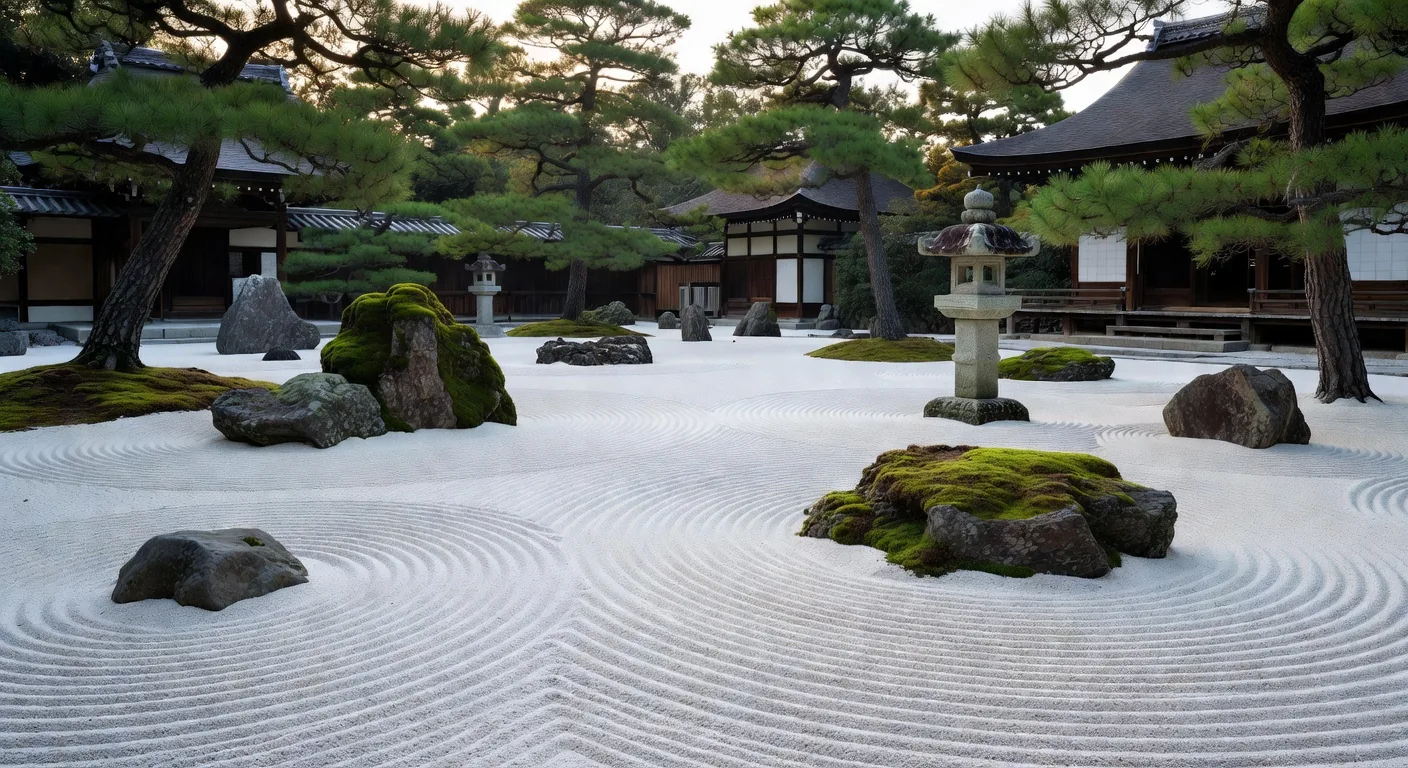
Zen rock garden representing Japanese minimalism

Architecture & Design

Modern Japanese
Architecture

Where ancient philosophy meets contemporary form — Japan's architects have forged a singular vocabulary of space, material, and silence.

Scroll

Tradition and Modernity in Dialogue

Japanese modernism is not a rejection of tradition but its deepest continuation. From the postwar reconstruction era to the present day, Japan's architects have absorbed Western Modernism, Metabolism, and digital innovation while remaining anchored in a spatial sensibility that prizes emptiness, natural light, and the passage of time.

The concept of ma — the meaningful pause between things — manifests in how Japanese architects treat negative space with the same care given to built form. The interplay of inside and outside, of opacity and transparency, of rough concrete and natural cedar, produces buildings that feel simultaneously contemporary and rooted in centuries of craft.

Today, Japan leads the world in sustainable design, digital fabrication, and the adaptive reuse of historic structures, producing architecture that is both globally influential and distinctly Japanese in character.

7
Pritzker Prize Winners
1960
Metabolism Movement Founded
36K+
Registered Architects
2021
Olympic Stadium, Tokyo
Japanese architectural composition

Featured Architects

Four Pritzker Prize laureates who have defined the global conversation around architecture and whose work represents the fullest expression of Japan's spatial philosophy.

A

Tadao Ando

Born 1941 — Pritzker 1995

Largely self-taught, Ando developed a meditative language of exposed concrete that harnesses light as a primary building material. His spaces create a dialogue between geometry and nature, silence and sensation. He transforms the raw industrial surface of béton brut into something spiritual.

  • Church of the Light, Osaka (1989)
  • Naoshima Contemporary Art Museum (1992)
  • 21_21 Design Sight, Tokyo (2007)
  • Ando Museum, Naoshima (2013)
K

Kengo Kuma

Born 1954 — Pritzker 2024

Kuma's practice is defined by the erasure of architecture — by making buildings dissolve into their surroundings through layered natural materials. He employs wood, stone, bamboo, and paper to create permeable surfaces that breathe with the landscape, challenging the Modernist monolith.

  • Kiro-san Observatory, Ehime (1994)
  • Bamboo Wall House, Beijing (2002)
  • Japan National Stadium, Tokyo (2019)
  • V&A Dundee, Scotland (2018)
I

Toyo Ito

Born 1941 — Pritzker 2013

Ito's architecture explores the fluid boundary between the virtual and physical world. Drawing on concepts from information theory and nature, he designs structural systems that appear to grow organically — latticed façades, branching columns — producing a sensation of dynamic lightness.

  • Tower of Winds, Yokohama (1986)
  • Sendai Mediatheque (2001)
  • Meiso no Mori Crematorium (2006)
  • Taichung Metropolitan Opera House (2016)
B

Shigeru Ban

Born 1957 — Pritzker 2014

Ban is renowned for his humanitarian architecture and pioneering use of non-conventional structural materials — especially paper tubes and cardboard. His emergency shelters deployed after the Kobe earthquake and Christchurch disasters demonstrate that innovative architecture is a moral as much as aesthetic pursuit.

  • Paper House, Lake Yamanaka (1995)
  • Paper Log House, Kobe (1995)
  • Centre Pompidou-Metz (2010)
  • Cardboard Cathedral, Christchurch (2013)

Modern Renovation of a Traditional Townhouse

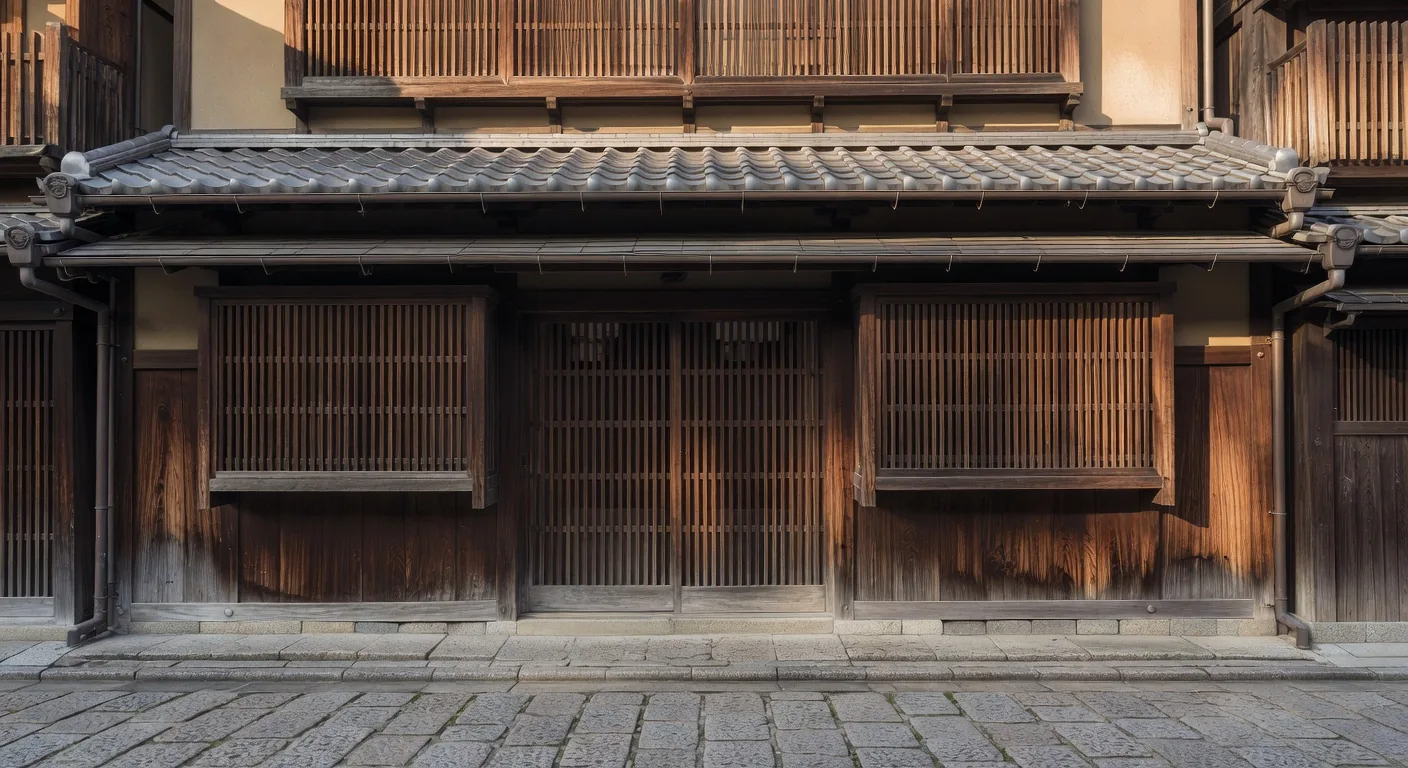
Kyoto machiya townhouse renovation Kyoto, 2023

Kyoto Machiya: Breathing New Life into an Edo-Era Merchant House

The machiya — the long, narrow wooden townhouse of Kyoto's merchant districts — is one of Japan's most distinctive domestic typologies. Built to maximize street frontage while channeling light deep into the plot through layered interior gardens (tsuboniwa), the machiya represents a sophisticated vernacular response to urban density.

This renovation project by a Kyoto-based practice preserves the original cedar framework and tile roof of a 120-year-old machiya in the Nishijin district while introducing a discreet structural steel armature, contemporary kitchen and bathroom facilities, and passive climate control systems inspired by the building's own ventilation logic.

The intervention honours the principle of kintsugi — highlighting joins rather than concealing them. Where new concrete meets old timber, the transition is made visible, creating a legible archaeological layer. The garden rooms are reimagined with native moss and roji-style stepping stones, updated with concealed LED wash lighting to preserve their meditative atmosphere after dark.

Location
Nishijin, Kyoto
Original Construction
c. 1903 (Meiji Era)
Renovation Year
2023
Floor Area
180 m² (two storeys)
Materials Retained
Cedar, earthen walls, kawara tile
New Interventions
Steel, glass, rammed earth

Notable Modern Buildings

Landmark structures that define Japan's modern urban skyline and demonstrate the full range of contemporary architectural ambition.

東京 🗼

Completed 2012

Tokyo Skytree

Sumida, Tokyo

At 634 metres, Tokyo Skytree is the world's tallest tower and Japan's most prominent modern landmark. Its form is derived from a triangular base that transitions to a circle — a structural innovation inspired by traditional five-storey pagoda design, which achieves seismic stability through a central pillar system mirroring ancient temples. Architects Nikken Sekkei designed the tower to reference the aesthetic of Japanese sword forging.

634m Nikken Sekkei Telecommunications
🏢

Completed 2008

Mode Gakuen Cocoon Tower

Shinjuku, Tokyo

This 50-storey educational skyscraper by Tange Associates is one of the world's most recognisable towers. The spiralling façade — resembling a cocoon wrapping around three interlocked educational institutions — is both structurally expressive and symbolically potent, suggesting transformation and the emergence of creative talent. The structural diagrid eliminates the need for internal columns, creating large flexible floor plates.

204m Tange Associates Education
カプセル

Completed 1972

Nakagin Capsule Tower

Shimbashi, Tokyo

Kisho Kurokawa's 1972 Metabolist masterpiece comprised 140 prefabricated capsules bolted to two concrete shafts, each designed to be replaceable as technology advanced. The capsules — measuring just 2.3 by 3.8 metres — contained fold-out beds, built-in appliances, and a circular porthole window. Though demolished in 2022, the tower remains the most iconic realisation of Metabolist ideology and was preserved through detailed 3D scanning.

14 Floors Kisho Kurokawa Metabolism
競技 🏟

Completed 2019

Japan National Stadium

Shinjuku, Tokyo

Kengo Kuma's design for the 2020 Olympic Stadium employs 47 species of wood sourced from every prefecture in Japan, creating a ring of overhanging timber eaves that evokes the horizontal layering of traditional Japanese architecture. The stadium's integrated green roof absorbs rainwater and reduces urban heat island effect. The structure seats 68,000 spectators and consumes 40% less energy than its predecessor through passive ventilation design.

68,000 seats Kengo Kuma Sports